Surveys on family practices show a recurring finding: the most significant moments for children are not the most spectacular or the most expensive. The French interministerial report “Children and Screens, In Search of Lost Time,” submitted in April 2024, emphasizes the notion of co-use and shared support. Data from Public Health France remind us that brief but regular times count just as much as the big occasions.
Here are ten concrete ideas, accessible without a specific budget or distant travel, to create lasting memories.
1. Geocaching in the city or forest
Geocaching transforms an ordinary walk into a life-sized treasure hunt. A free app on your phone indicates nearby caches, often hidden in urban parks, forest paths, or even busy streets.
The family interest lies in cooperation: the younger ones spot visual clues, while the older ones read the GPS map. You can check family activities on Gazette Debout to vary the routes according to the seasons. The activity costs nothing, lasts as long as you want, and works well both in the suburbs and in the city center.
2. Movie night with voting and homemade popcorn
Watching a movie together is nothing new. What changes the game is ritualizing the moment. Each family member suggests a title, votes by raising hands, and the loser chooses next time.
The interministerial report on screens emphasizes that watching with the child and commenting on what happens transforms passive time into active exchange. Preparing popcorn or pancakes before the screening adds a phase of collective cooking that becomes part of the memory.
3. Time capsule to bury in the garden
Each family member slips an object, a drawing, a letter, or a photo into an airtight box. A date for opening (one year, five years) is set, and the box is buried or stored in an agreed-upon place.
The gap between what we write and what we will discover creates a connection with the future. For children, rereading their words a few years later produces a surprise effect that is hard to replicate with a classic activity. No garden is needed: a locked closet works just as well.
4. Hiking with a donkey or pony
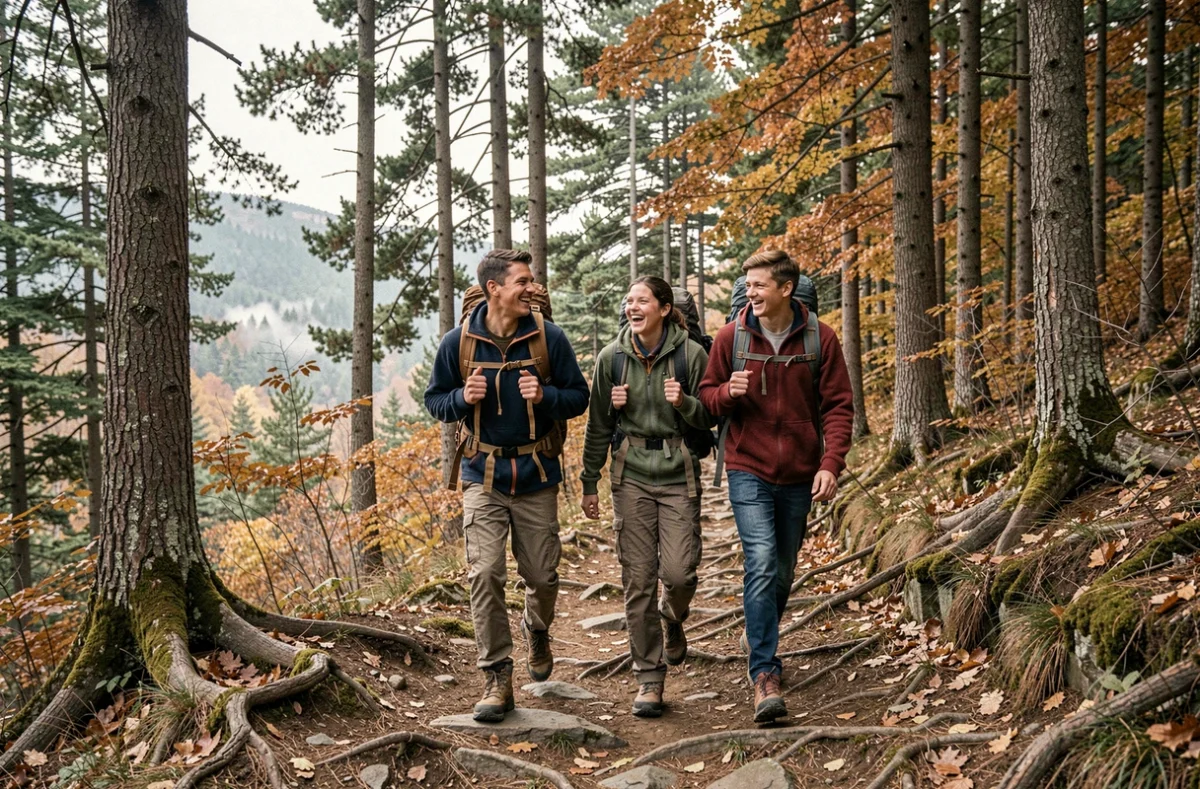
Walking with a pack animal changes the dynamics of a hike. The donkey carries the bags, freeing the children from the weight and reducing complaints about fatigue. Several educational farms offer this option for half a day, often at a modest price.
The animal sets a slow pace, which suits families with young children. We stop when the donkey grazes, and we move on when it is ready. This apparent constraint quickly becomes a source of collective laughter.
5. Themed cooking workshop with the children
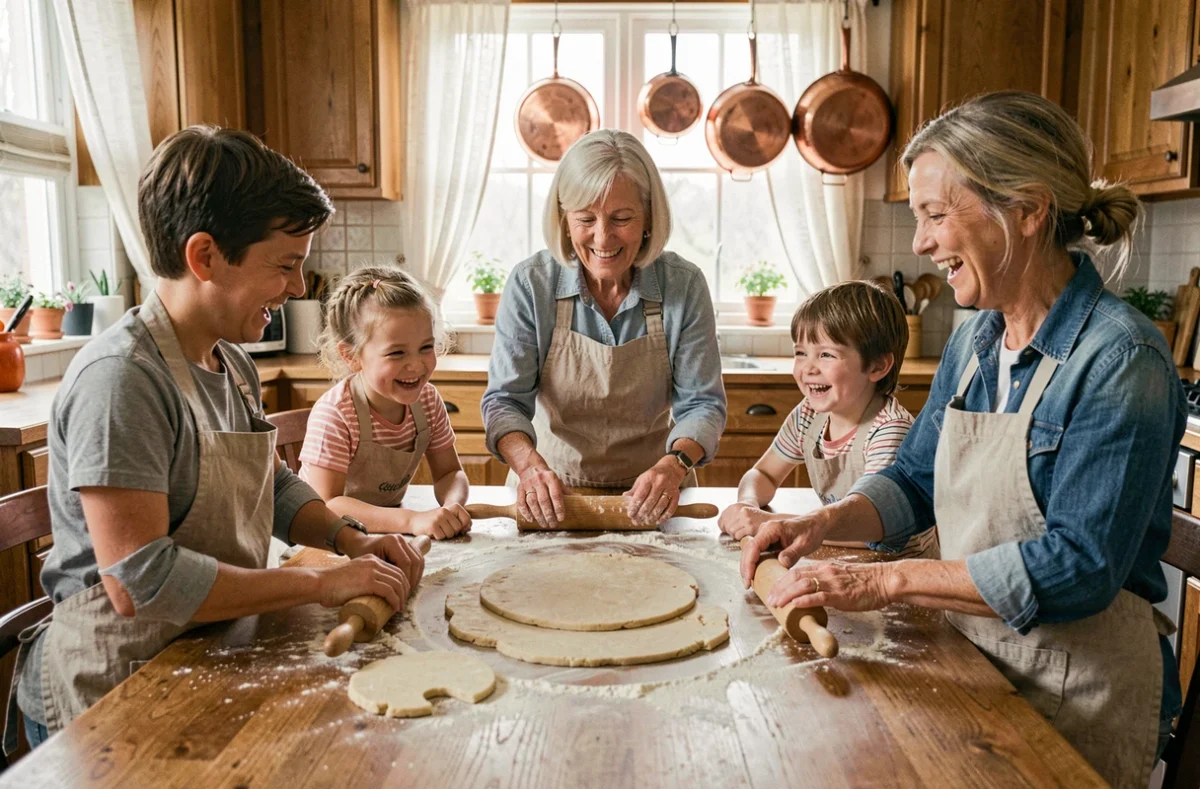
Choose a country, search together for a typical recipe, buy the ingredients, and cook from start to finish. Mexico (tacos), Japan (makis), and Italy (homemade pizza) work well because the steps are simple, and children can participate at every stage.
A themed menu engages reading, math, and fine motor skills without the child feeling like they are learning. The shared meal afterward extends the pleasure. You can establish a rotation: each month, a family member chooses the country.
6. Cooperative video game with the family
Digital co-use, as described in the April 2024 interministerial report, clearly distinguishes solitary screen time from shared screen time. Playing together in a cooperative game (building a world, solving puzzles) puts parents and children on the same team.
This activity works particularly well on winter evenings or rainy days. Limiting the session to one hour and discussing it afterward helps maintain the framework without turning the game into a source of tension. Titles suitable for all ages are available on most consoles and computers.
7. Photo album or video capsule of the holidays
Instead of letting photos accumulate on a phone, dedicate an evening to sorting, commenting, and assembling an album (paper or digital) that transforms scattered snapshots into a family narrative. Children love to see themselves younger, even just a year ago.
The video version works too: filming short clips during the holidays and then editing them together with music chosen together. The result doesn’t need to be professional. What matters is the moment of collective viewing, the comments, and the laughter at the bloopers.
8. Unusual night close to home
Sleeping in a tent at the back of the garden, in a treehouse less than an hour’s drive away, or simply setting up mattresses in the living room for an indoor campout. The change of sleeping location is enough to create an event for the children.
Accessibility often plays an underestimated role. Families without a car or on a tight budget can recreate the “unusual night” effect without reservations or travel. A flashlight, a sleeping bag, and a story told in the dark are all that’s needed.
9. Creative team challenge: short film or play
Write a five-minute script, assign roles, make costumes with what you find at home, and film. The process matters more than the result. Children discover storytelling, staging, and teamwork.
- Scriptwriting: everyone suggests a scene, and we assemble it all in fifteen minutes
- Making props: cardboard, fabrics, improvised makeup
- Shooting or performing: one phone is enough to film
- Screening or performance in front of grandparents, live or via video call
This activity can span an entire weekend or focus on an afternoon. The resulting film becomes part of the family memory collection.
10. Local market followed by a zero-waste picnic
Go to the market in the morning with the children, give them a small budget to choose fruits, cheese, or bread, and then settle in the nearest park to eat what you’ve just bought. The activity combines outing, learning autonomy, and outdoor dining.
Adapting the outing to available transportation makes it accessible to all families. Markets can be found in most towns, often within walking distance or by bus. The zero-waste picnic adds an educational dimension without a moralizing discourse: we show, we don’t preach.
None of these ten ideas require expensive equipment or distant travel. The common thread remains shared time, whether it lasts twenty minutes on a weekday evening or an entire day during the holidays. The most enduring memories often arise from an unexpected detail, not from a perfect plan.