
A dog that turns its head away when you bring out the brush, or a cat that scratches as soon as you touch its hind paws: these refusals aren’t acts of defiance. They’re the first signs to consider when establishing a daily care routine for your dog or cat. Telling a simple dislike of being touched apart from a sign of pain changes what you should do.
Handling aversion in dogs and cats: discomfort or a health warning?
An animal that usually tolerates brushing or ear checks but suddenly starts running away or biting is showing a change in behavior. The goal isn’t to force the care routine, but to work out what has changed.
There are two ways to interpret this behavior. Temporary discomfort shows up as occasional avoidance, often linked to the circumstances: a session that’s too long, an uncomfortable position, or a noisy environment. The animal remains sociable outside of grooming and shows no changes in appetite or resting habits.
A change that warrants veterinary advice presents differently. Ouest-France notes that unusual isolation, persistent licking of a specific area, or changes in appetite and thirst can signal a health problem. If handling aversion is accompanied by any of these signs, daily care should give way to a veterinary appointment.
One thing to remember: never give human medication without veterinary advice. Applying an anti-inflammatory or household antiseptic to a sensitive area may seem tempting, but it often makes things worse for both dogs and cats.
Coat brushing: frequency and positive reinforcement
Brushing is the most important part of a daily care routine. It lets you check the skin, spot parasites, and identify painful areas. We recommend treating it as a conditioning exercise, not a chore to rush through.
A veterinarian interviewed by TF1 recommends brushing at least twice a week and making each session a positive experience. Short sessions with rewards build tolerance over time. Punishing an animal for refusing has the opposite effect: accumulated stress, loss of trust, and escalating avoidance behavior.
Product descriptions and general-interest guides offer standard durations and frequencies. In practice, a short-haired dog living in an apartment and a Persian cat with a dense undercoat have very different needs. Choosing the right brush (slicker brush, Furminator, rubber grooming glove) and session length for the coat type is the only rule that works. At boule-de-poil.fr, accessories are organized by coat type, making it easier to narrow down your options.
Eye, ear, and dental care: how often?
Caring for sensitive areas (eyes, ears, and mouth) starts with observation. Inspecting doesn’t mean you need to clean them every time.
- Clean the eyes with saline solution and lint-free cotton only when you can see dirt or discharge. Any unusual discharge, redness, or swelling calls for a veterinary appointment, not eye drops chosen at random.
- Check the ears every week. Dark brown earwax, a strong odor, or repeated scratching may point to an ear infection or parasite infestation. If there are no symptoms, preventive cleaning with a suitable ear-cleaning solution is enough.
- Brush the teeth regularly using a finger brush and toothpaste formulated for pets. Persistent bad breath often signals a dental or oral health problem whose effects can extend beyond the mouth.
In light-colored dogs and cats, eye discharge can leave oxidation stains. Applying a thin layer of petroleum jelly beneath the eye can help prevent these marks without irritating the skin.
Indoor environment for cats: create a space that helps prevent stress
The SPA emphasizes something most pet-care articles overlook: an indoor cat thrives when its territory lets it express its natural behaviors. Scratching posts, elevated perches, hiding places, and separate areas for food, litter, and water all help structure a cat’s daily life just as much as brushing does.
Enrichment also means providing new opportunities to play. A bored cat may develop compensatory behaviors (excessive licking, urine marking, redirected aggression) that are sometimes mistaken for a skin or behavioral problem.

Secure windows and balconies: an overlooked part of daily care
The SPA warns about falls from windows and balconies, as well as tilt-and-turn windows where a cat can get trapped. This risk also applies to pets that never go outside. Installing a protective screen or window lock is part of daily care, just like filling the food bowl.
Adapting daily care for an animal that doesn’t like being touched
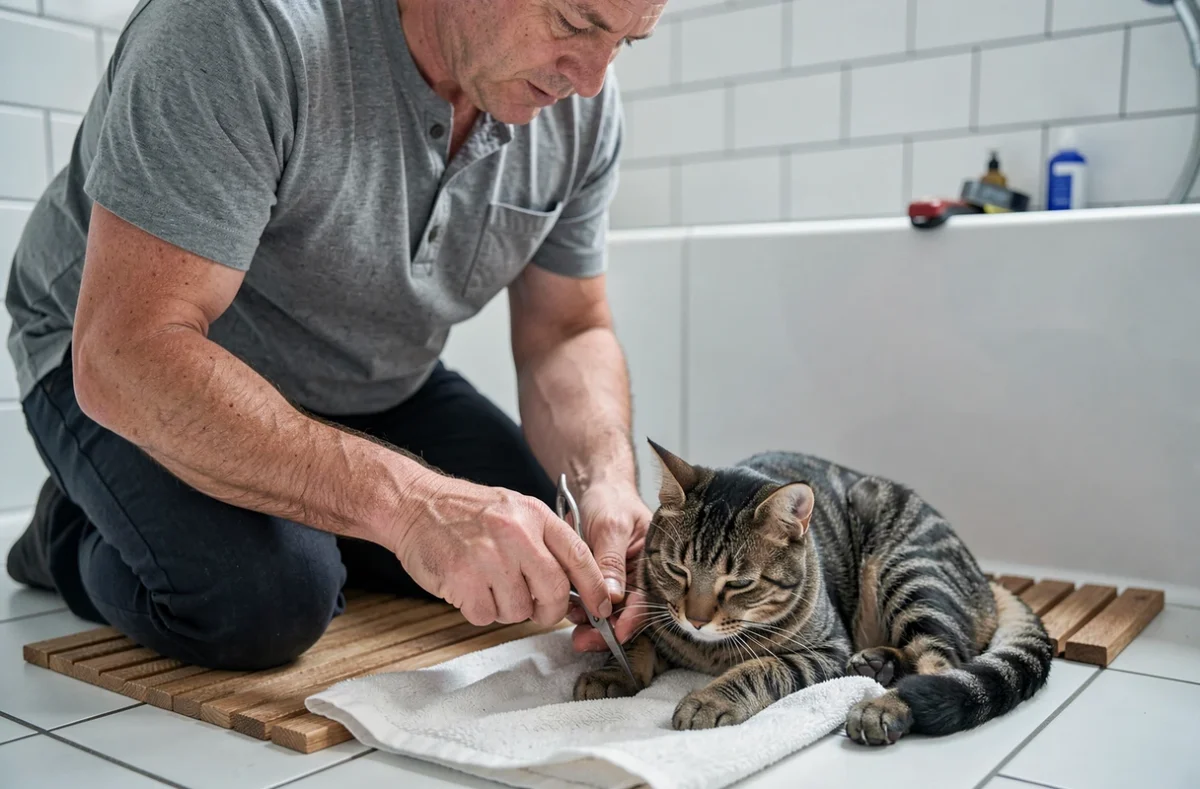
Forcing care on a stressed animal damages your relationship and makes each subsequent attempt more difficult. The best approach is gradual desensitization.
- Start by briefly touching the nearest area the animal tolerates, then reward it immediately.
- Gradually increase the duration and move closer over several days, never in a single session.
- Break care into smaller steps: one ear today, the other tomorrow. Two claws now, the rest after a break.
- Try different adjustments and adapt to the animal’s reactions, as the SPA recommends for cats.
If the animal still resists any handling of a specific area despite this gradual approach, a veterinary appointment is essential. Persistent, localized refusal points to underlying pain rather than a simple personality trait.
The most effective care routine for a dog or cat rests on three practical principles: observe before intervening, adjust the frequency to the animal’s actual needs, and treat signs of refusal as information, not an obstacle. A brief, well-tolerated care session is more beneficial than a complete routine forced on your pet.