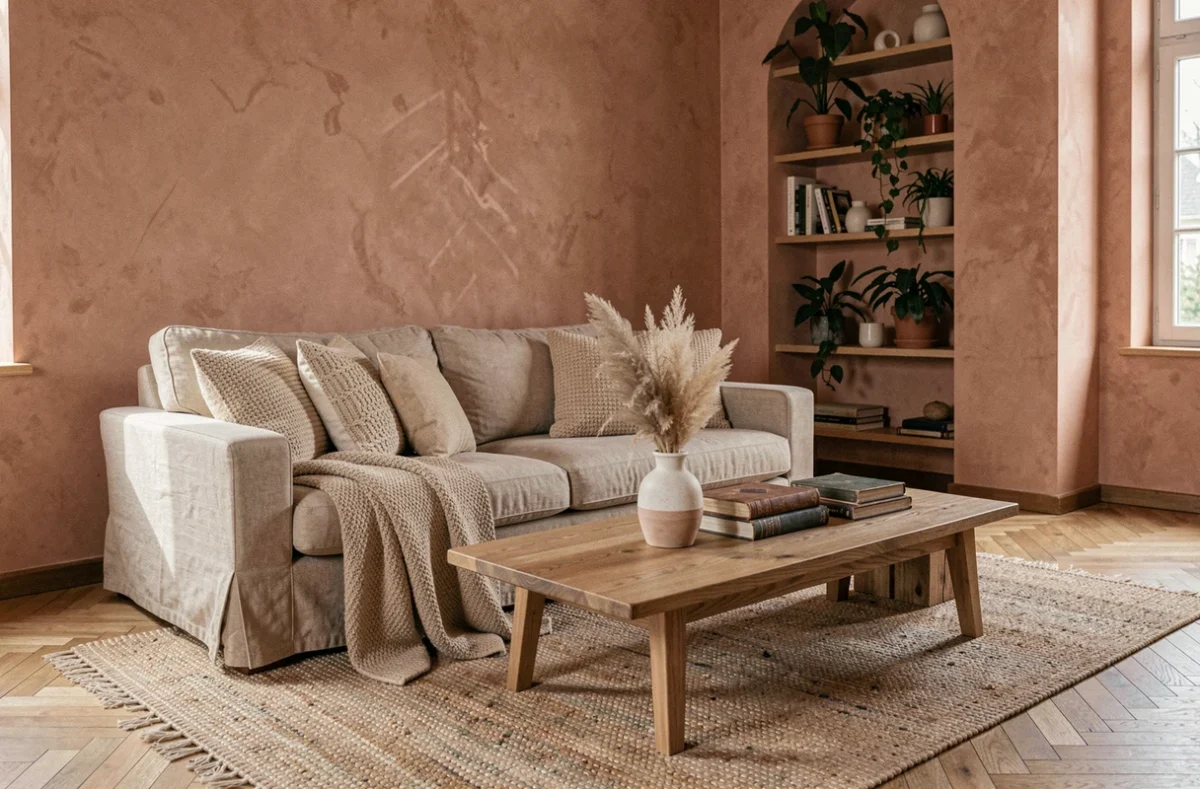
A comfortable sofa, three mismatched cushions and a scented candle aren’t enough to make a living room feel welcoming. Creating a warm interior comes down to practical choices involving light, materials and airflow.
A national survey of 571 homes conducted between 2020 and 2023 and published by the Observatory for Indoor Environmental Quality in June 2025 reminds us that paints, adhesives, varnishes and furniture can all release volatile compounds. Decorating also means protecting the quality of the air we breathe.
Indoor air quality and choosing decorative materials
We rarely think about ventilation when repainting a wall or installing a new shelf. But the issue is real: a low-quality particleboard unit or unsuitable varnish can release volatile organic compounds for weeks. In a poorly ventilated 12 m² bedroom, these emissions can build up.
Ventilating for at least ten minutes a day and checking that your mechanical ventilation system is working properly matter just as much as choosing a colour. When selecting paint, look for an A+ rating, which indicates the lowest VOC emissions. For furniture, solid wood or second-hand pieces that have already “off-gassed” can help tackle the problem at its source.
Reuse centres, second-hand marketplaces and in-store resale schemes make it possible to furnish your home without always buying new. You can find affordable pieces in wood, ceramic or metal, with the added benefit of a unique style that mass-produced new furniture can’t offer. Browse home décor at Direct Home to discover ranges that combine style and durability.
Room-by-room lighting: colour temperature and brightness
Fitting every room with “warm white” 2,700 K bulbs doesn’t guarantee the right atmosphere. Colour temperature doesn’t measure light output: brightness, glare and colour rendering also matter. A kitchen worktop needs precise task lighting, while a reading nook in the living room calls for soft, directional light.
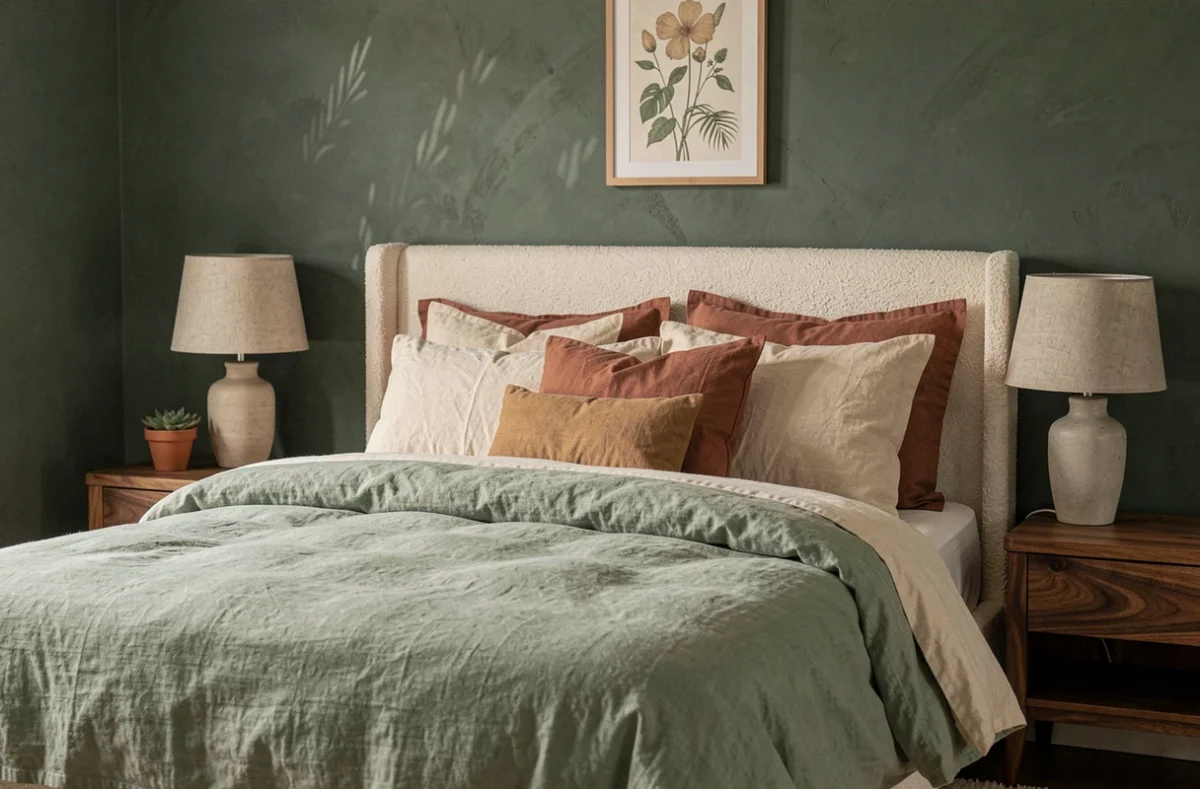
In practice, each room benefits from three layers of lighting:
- General ambient lighting: a diffused ceiling light or pendant, between 2,700 K and 3,000 K in living areas, providing a comfortable base level of light without glare.
- Task lighting: a desk lamp, under-cabinet kitchen lights or a bedside reading lamp. Use brighter light and, sometimes, a higher colour temperature (3,500 K) for tasks that require precision.
- Accent lighting: fairy lights, a table lamp or candles. These create areas of contrast that add depth to a room without using much energy.
Layering all three types of lighting in the living room, bedroom and even bathroom transforms how a space feels. A dimmer on the main light lets you switch from dinner lighting to a movie-night mood in a second.
Sustainable decorating: avoid the fast décor trap
An article published by La Dépêche on November 1, 2026, describes the growing popularity of low-cost decorative items and concerns about how quickly accessories are replaced. The pattern is simple: you buy a set of candles, a trendy vase and three matching frames, then six months later they all end up in a box because the trend has moved on.
Choosing durable, repairable or reused items costs less over time and creates a more cohesive home. A wool throw, a vintage mirror or handmade pottery can last for years without going out of style. Invest in a few well-made pieces rather than accumulating disposable accessories.
For textiles, check the fabric composition: a cotton or linen cushion will age better than a polyester one. For decorative objects, choose natural materials such as stoneware, wood and blown glass over gold-coloured plastic finishes that start to peel after a few months.
Colours and materials: creating harmony in the living room and bedroom
Choosing colours is where many people get stuck. Start with a simple formula: one dominant neutral shade, one secondary colour and one accent colour. In a living room, that might mean an off-white wall, a sage green sofa and terracotta cushions. In a bedroom, try a sand-coloured wall, navy bedding and a brass lamp.
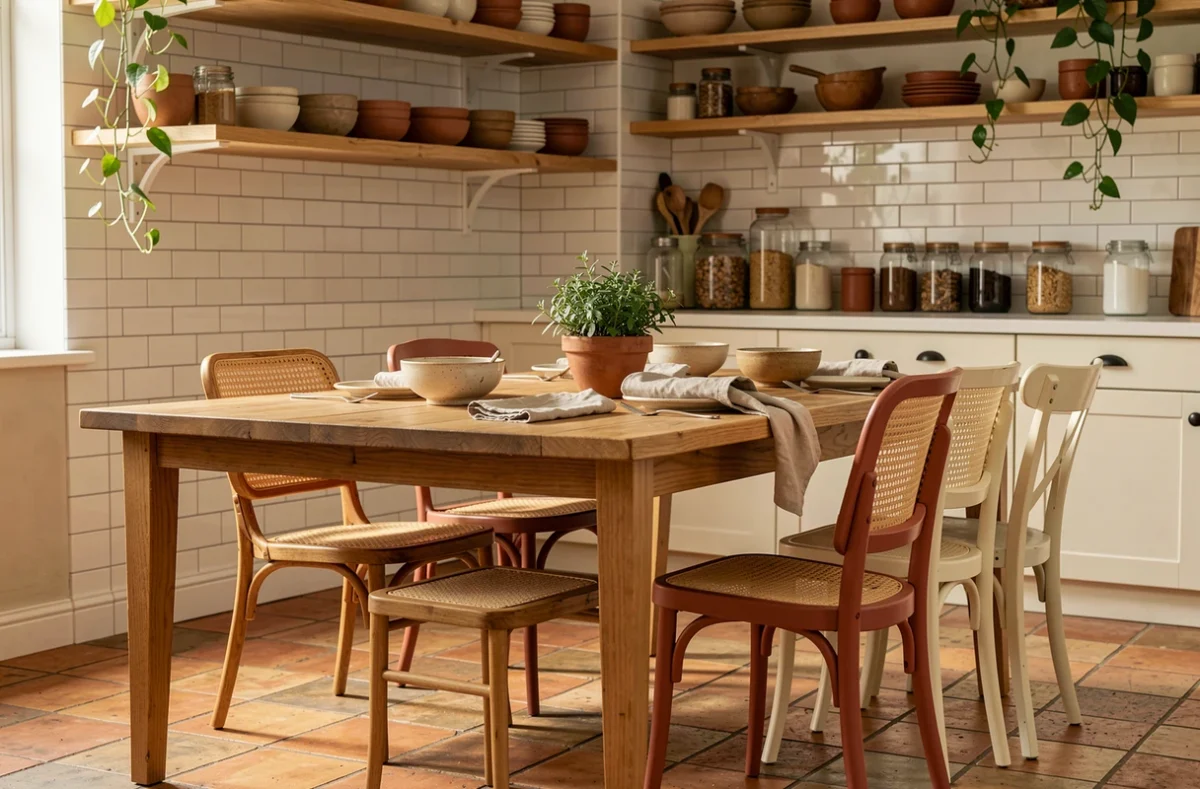
Creating a sense of continuity between rooms doesn’t mean painting everything the same colour. Instead, carry a material or shade from one room to another. The light wood of the living room furniture can be echoed in the hallway mirror frame. The bedroom’s linen curtains can be matched by a table runner in the dining room.
Natural materials add warmth without requiring elaborate decorating. Rattan, jute, terracotta and unfinished wood absorb light rather than reflecting it, softening the atmosphere. Pair them with smooth surfaces such as glass and brushed metal to keep the room from feeling too rustic.
Proportion rules for small spaces
In a room smaller than 15 m², limit the number of visible objects and make use of vertical space. A tall shelf draws the eye upwards and frees up floor space. A few carefully chosen objects create more warmth than a cluttered collection. A well-sized rug anchors the furniture and makes the room feel larger.
Ultimately, creating a warm, harmonious interior comes down to a few practical choices: healthy materials, lighting suited to each activity, coordinated colours and objects you’ll keep for years. The rest comes from taking the time to notice what works in your home, one room at a time.