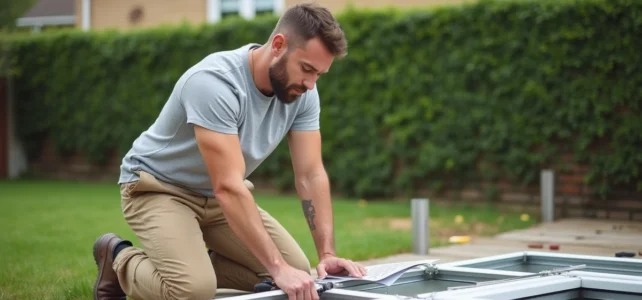
A kit veranda sold at a DIY superstore comes in the form of pre-cut profiles, glazing, and hardware, accompanied by an assembly manual. The concept is appealing because it promises quick installation without the need for a professional installer. However, the reality of the project depends on parameters that the manual does not cover: the quality of the slab, administrative compliance, and a watertight connection with the existing facade.
Level of the slab and anchoring points: the true prerequisite for a kit veranda
Before unpacking the first profile, the concrete slab on which the structure will rest dictates everything else. A kit veranda delivered by Brico Dépôt or any other retailer assumes a perfectly flat, level, and sufficiently thick support to accommodate heavy mechanical fixings.
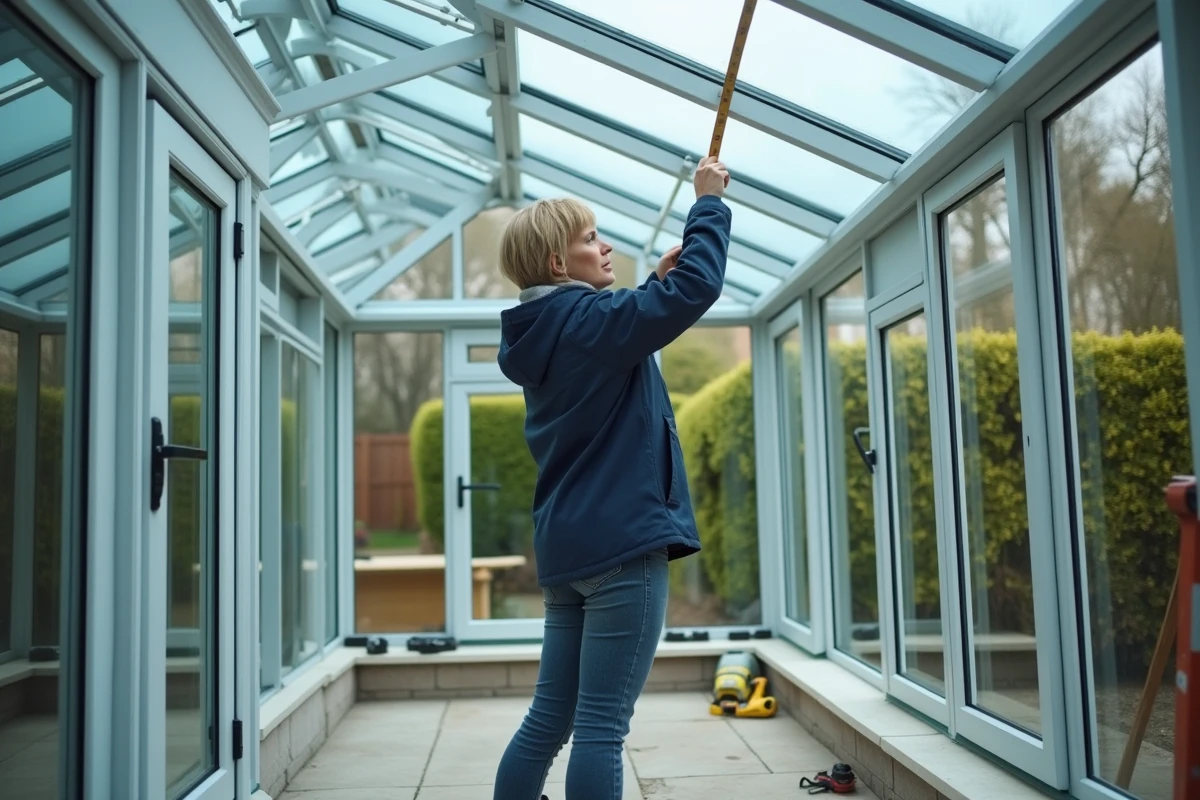
A level discrepancy of a few millimeters skews the entire assembly. Aluminum profiles cannot compensate for a lack of flatness: the glazing joints shift, water stagnates in the grooves, and the sealing degrades from the first season. Checking the level with a laser across the entire surface, diagonally, remains the most cost-effective step of the project.
The type of anchoring varies depending on the support. On a reinforced concrete slab, standard expansion plugs are sufficient. On a paving laid on a sand bed, the load-bearing capacity is inadequate: it is necessary to pour footings or a peripheral beam. Those wishing to install a Brico Dépôt kit veranda with Cherry Déco will find useful technical references on this specific point.
Preliminary declaration or building permit: the constraint not included in the kit
The speed of assembly does not exempt from the administrative step. Every veranda creates floor space, and urban planning regulations apply, whether the structure is installed by a craftsman or by the owner themselves.
- Below a certain surface threshold, a preliminary declaration of works is sufficient, submitted to the town hall with a site plan and a mass plan.
- Above this threshold, a building permit becomes mandatory, with a longer processing time.
- In areas covered by a local urban plan, additional constraints may apply: color of the profiles, roof slope, setback from property boundaries.
Starting the assembly before obtaining authorization exposes one to a work stoppage and, in the worst case, an obligation to demolish. Submitting the administrative file as soon as the kit is ordered allows for absorbing the processing time during delivery.
Sealing of the facade connection: the weak point of quick assemblies
The junction between the house wall and the veranda structure concentrates the majority of the leaks reported after a self-assembly. The kit generally provides an aluminum flashing and a silicone seal, but the implementation requires a precision that the manual summarizes in a few lines.
The flashing must be embedded in a groove made in the render or plaster, not simply glued on the surface. A flat flashing without engraving detaches due to thermal expansions. After insertion, the sealing joint is placed on a calibrated joint bed to avoid three-sided adhesion, which prevents the sealant from working properly.
The roof of the veranda, whether it consists of polycarbonate panels or laminated glazing, must maintain a minimum slope to ensure drainage. A slope that is too shallow slows down water evacuation and puts more strain on the joints between panels. Checking the actual slope (and not just the theoretical slope from the manual) with a bubble level placed on a temporary rafter takes a few minutes and avoids costly corrections.
Aluminum or wood: which material for a quick kit veranda assembly
The kits available at DIY superstores primarily come in aluminum and, less frequently, in glued laminated wood. The choice of material directly influences the speed of assembly and the durability of the structure.
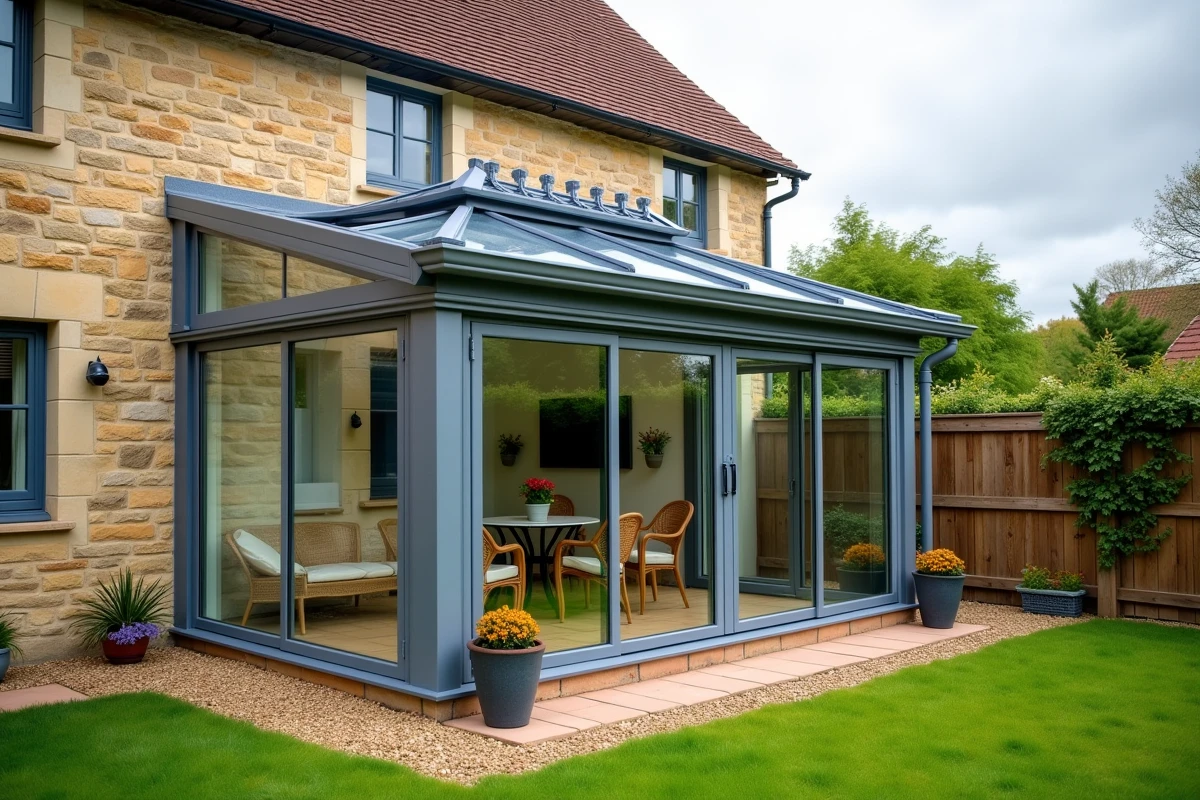
Aluminum remains the most suitable material for quick assembly. The profiles are lightweight, pre-drilled at the factory, and can be assembled by direct screwing or by interlocking with splice plates. No surface treatment is necessary after installation: the polyester lacquer applied at the factory resists UV rays and only requires cleaning with clear water.
Wood offers a different aesthetic but imposes additional constraints. The sections are heavier, complicating handling by two people. Each cut or drilling on-site exposes the raw wood to moisture and requires immediate treatment. Regular maintenance (stain or saturator) conditions the longevity of the structure.
Selection criteria based on the project context
- Assembly by one or two people without lifting equipment: prioritize aluminum for its lightness.
- Area exposed to wind or frequent bad weather: aluminum does not deform under humidity and maintains its dimensional stability.
- Seeking a traditional appearance consistent with a timber-framed house: the wood kit integrates better visually, provided one accepts a longer assembly time and ongoing maintenance.
Brico Dépôt kit veranda: speed of installation and durability
The promise of assembly in a few days holds if the support is ready, the authorization obtained, and the appropriate materials available. Skipping one of these steps to save time produces the opposite effect: sealing corrections, replacement of unsuitable fixings, or even partial disassembly to correct a plumb issue.
The speed of installation depends on preparation, not on the speed of screwing. A day spent checking the slab, marking the axes, and installing the facade flashing represents the most cost-effective investment of the project. The assembly of the profiles and the installation of the glazing, well guided by the manual, then proceeds smoothly.
A kit veranda correctly installed on a sound slab, with an engraved facade connection and fixings sized for the support, offers a lifespan comparable to an installation carried out by a professional. The difference rarely lies in the kit itself, and almost always in the rigor of the implementation.