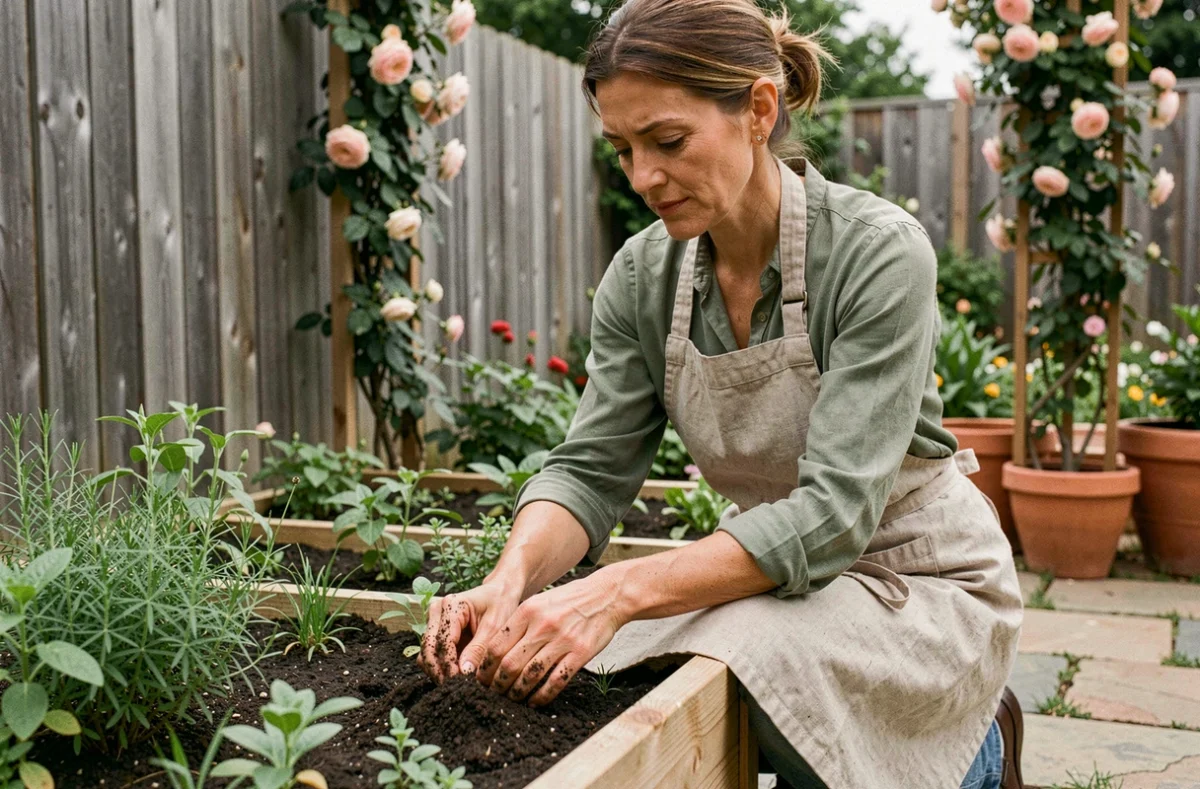
A well-functioning garden relies less on the accumulation of plants than on how water, light, and materials interact within the same space. Creating a harmonious garden requires measuring a few concrete parameters before planting anything: actual exposure, soil type, and available water volumes depending on the season.
Water management in the garden: the parameter that landscaping plans overlook
Most landscaping guides treat watering as a maintenance task. However, water is the primary limiting factor for a welcoming garden over time.
In France, prefectural decrees can limit or prohibit watering even when the water comes from a private tank. The rules vary depending on the level of drought and the territory, and it is necessary to check local guidelines via VigiEau before planning a watering system.
A garden designed as a water management device incorporates vegetated swales or infiltration zones that slow down runoff and maintain moisture during hot weather. This approach advantageously replaces a purely decorative bed that requires regular watering.
For rainwater harvesting, an outdoor tank not connected to the internal network generally does not require formalities. However, a connection inside the home imposes a strict separation of networks and may require a declaration at the town hall. Rainwater is unsuitable for drinking and food preparation.
Specialized resources published on lesprit-jardin.fr allow for a deeper exploration of these plant design questions adapted to the local climate.
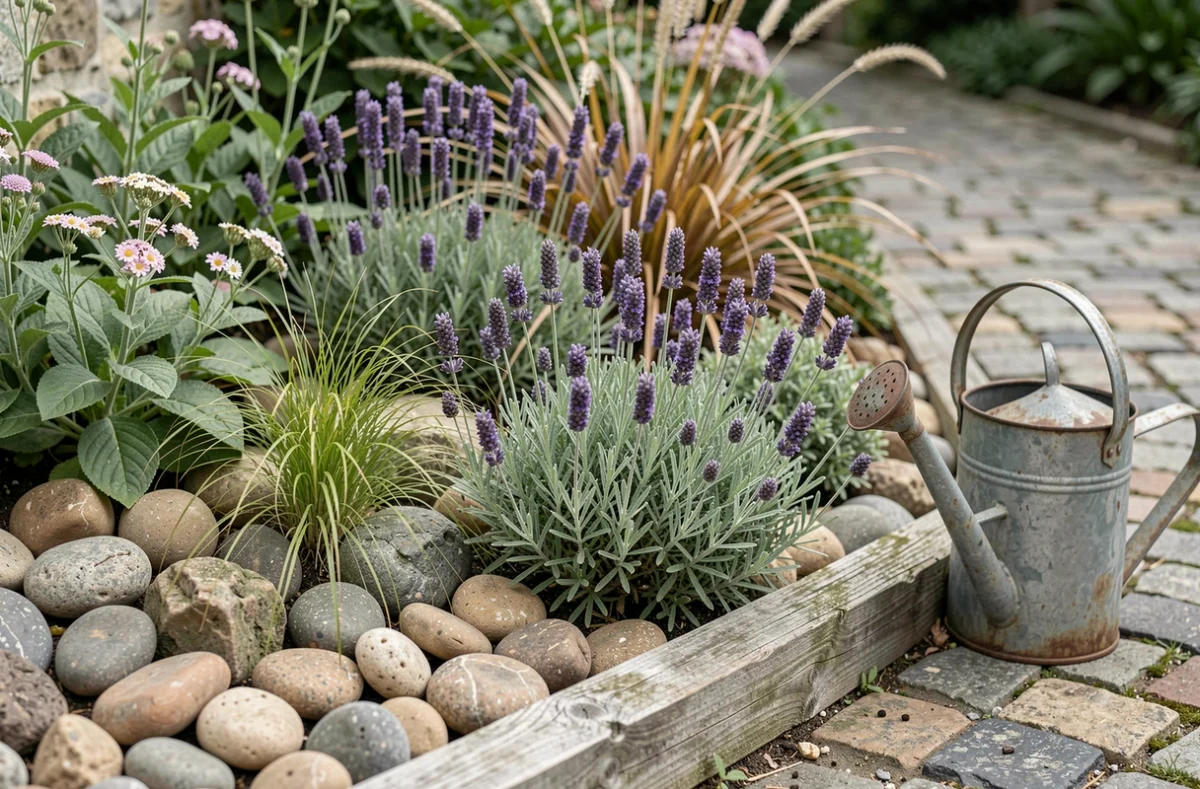
Materials and colors: comparative table to structure the space
The choice of materials determines the visual coherence of a garden. An uncontrolled mix of wood, stone, metal, and resin produces a disjointed effect, regardless of the quality of the plants.
| Material | Visual effect | Maintenance | Compatibility with humid climate |
|---|---|---|---|
| Wood (treated pine, Douglas fir) | Warm, natural | Stain or saturator every 2-3 years | Medium (graying, moss) |
| Natural stone (slate, sandstone) | Mineral, structured | Low | Good |
| Stabilized gravel | Permeable, understated | Occasional weeding | Good (natural drainage) |
| Exposed aggregate concrete | Contemporary | High-pressure cleaning | Good |
| Woven resin (furniture) | Light, modular | Soapy water | Good |
The operational rule is simple: limit materials to two or three families per space. A wooden terrace combined with stone borders and woven resin furniture forms a readable ensemble. Adding corten metal, polished concrete, and pebbles creates an overload.
Consistent color palette for flowers and furniture
Colors work in families. A harmonious garden relies on a main color scheme (for example, white, pale pink, mauve) punctuated by an accent color (a bright yellow, an orange).
Garden furniture follows the same logic. A terrace lounge in a neutral tone (anthracite gray, natural wood) highlights the blooms. Conversely, furniture in bright colors competes with the flower beds.
Plants suited to soil and exposure: what determines success
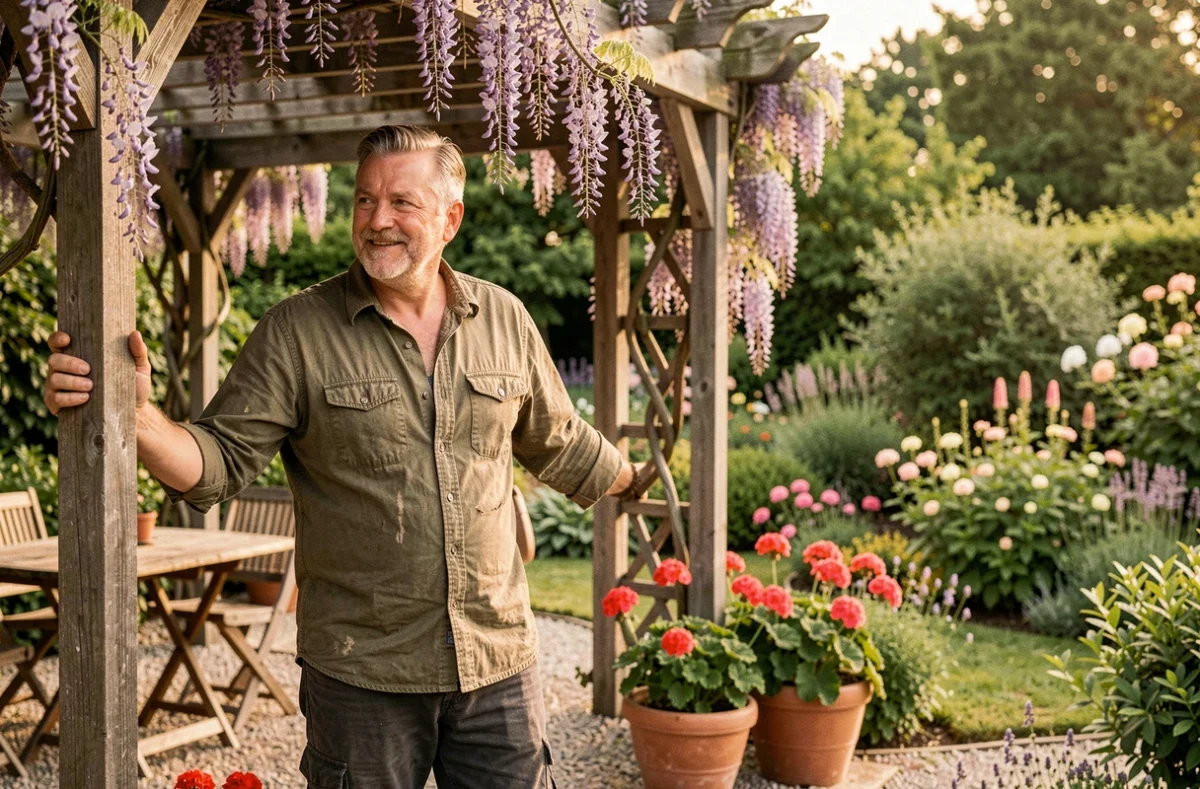
Planting without analyzing actual exposure and soil type is the most common cause of failure. A lavender bed planted in waterlogged clay soil rots within months.
- Clay and wet soil: favor hostas, astilbes, ferns, and dogwoods, which tolerate excess moisture and thrive in partial shade
- Sandy and draining soil: ornamental grasses, lavenders, sages, and yarrow find conditions close to their natural habitat
- Limestone soil: irises, peonies, and buddleias thrive without heavy amendments
- Dense shade (less than two hours of direct sunlight): ferns, periwinkles, and hellebores produce a dense plant cover without significant light input
Each area of the garden calls for a specific group of plants, not a general catalog. Grouping plants by water needs avoids watering compromises that poorly satisfy all species.
Evergreen shrubs to structure winter
A garden that welcomes year-round requires a framework of plants that do not disappear in November. Evergreens (boxwood, eleagnus, photinia, osmanthus) form stable volumes that structure the views from the house.
Placing these shrubs at the back of a bed or in a free hedge allows for maintaining visible plant architecture even under snow. Perennials and annuals can then fill the foreground in spring.
Creating functional zones without partitioning the garden
A welcoming outdoor space combines several uses: dining, relaxing, playing, gardening. The temptation is to separate these areas with strict hedges or fences, which visually fragments a modest-sized garden.
Soft transitions work better. A change in flooring (switching from grass to gravel, for example) is enough to mark an area without obstructing the view. A light pergola or a standard tree placed at the edge of the terrace signals a passage without creating a plant wall.
- Dining area: a stable surface (wood, slabs, concrete) wide enough to circulate around the table, near the kitchen
- Relaxation area: a semi-shaded corner, away from foot traffic, with a hammock or a bench backed by a green wall
- Productive area: a raised vegetable bed, oriented south, accessible by a Japanese stepping stone path to avoid compacting the surrounding soil
Connecting these areas with a continuous pathway unifies the reading of the garden. A simple curved path in stabilized gravel, bordered by low perennials, guides the eye and invites walking.
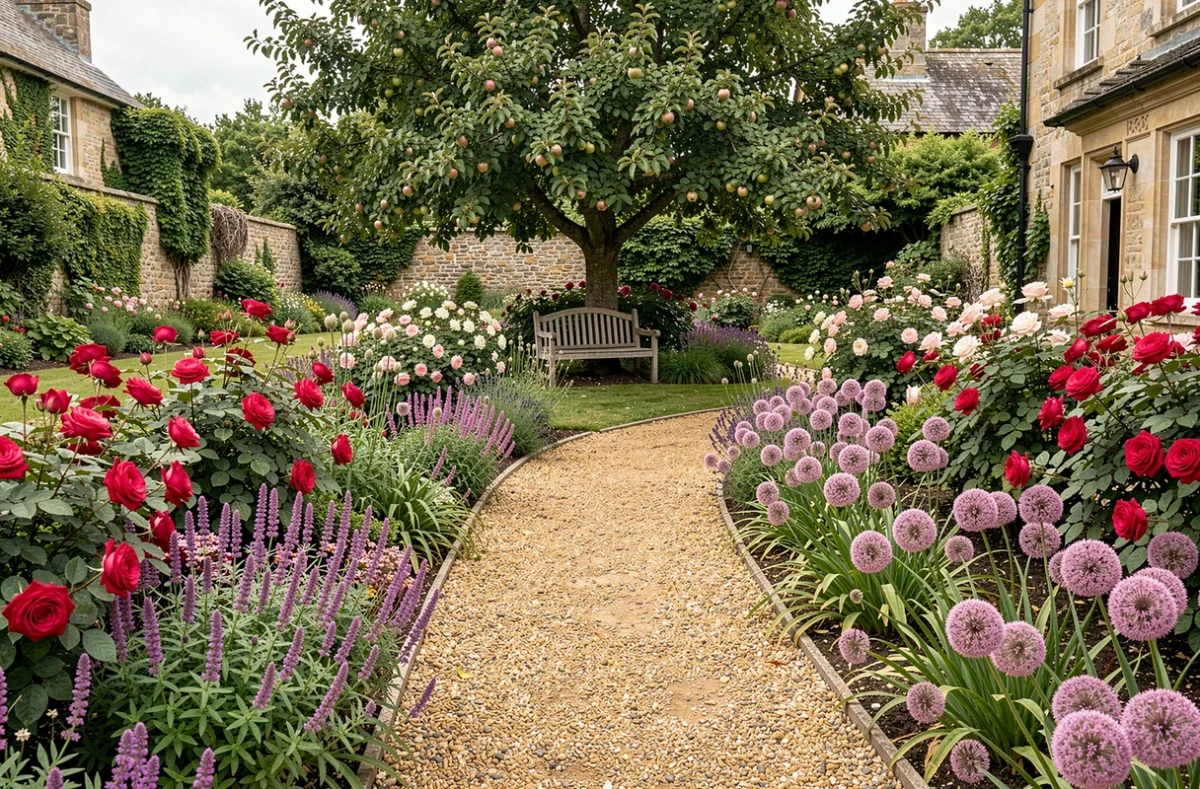
The success of an outdoor layout is measured over time, not on the day of planting. A garden designed around water management, a limited palette of materials, and plants suited to the local soil requires less maintenance each year.
Recent plantings sometimes benefit from a different regime during drought periods, with some local decrees allowing watering of trees and shrubs planted for less than two years during specific time slots. Checking these provisions early in the design process avoids losing plants during the first difficult summer.