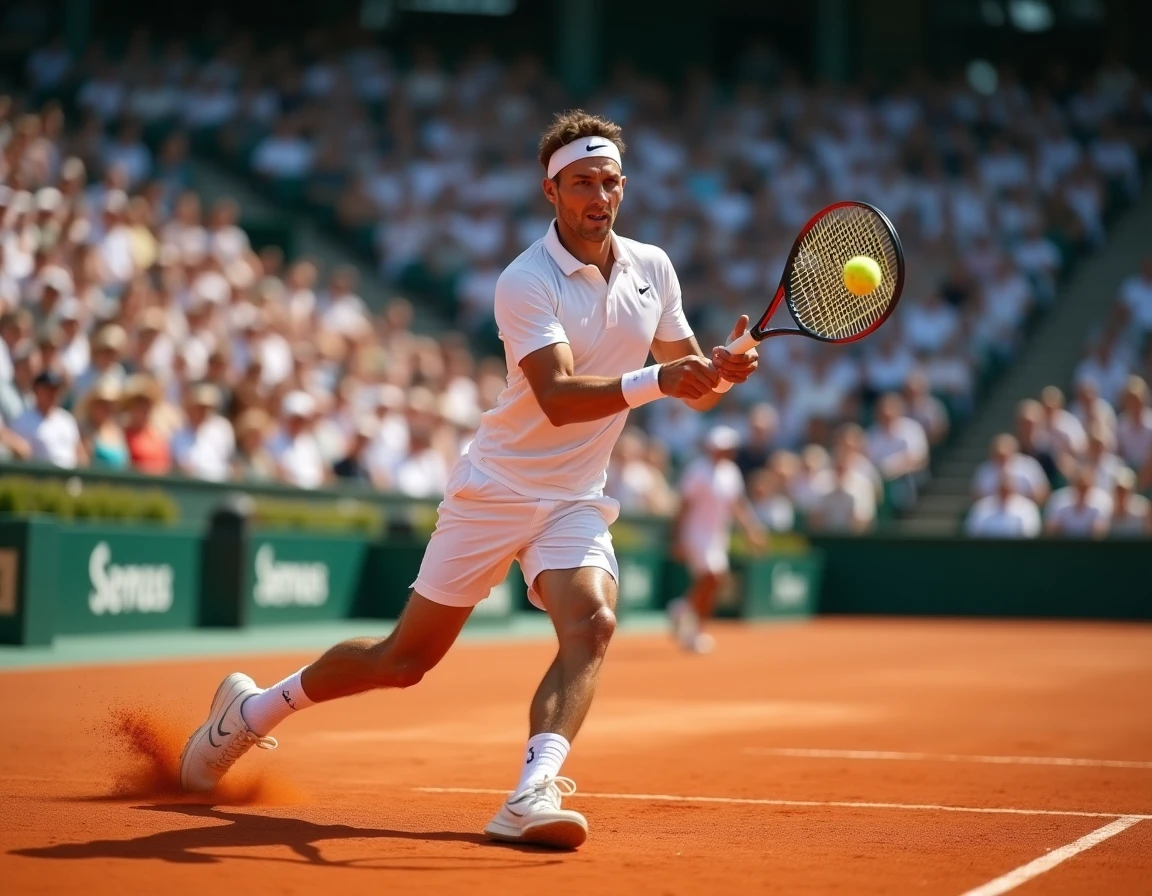
Winning all four Grand Slam tournaments in a single season already places a player among the legends of tennis. Adding an Olympic gold medal to this series constitutes such a rare achievement that a term had to be invented to describe it: the Golden Slam. Only one person has accomplished this feat in singles in able-bodied tennis, and that person is Steffi Graf, in 1988.
Steffi Graf in 1988: the only perfect season in able-bodied tennis
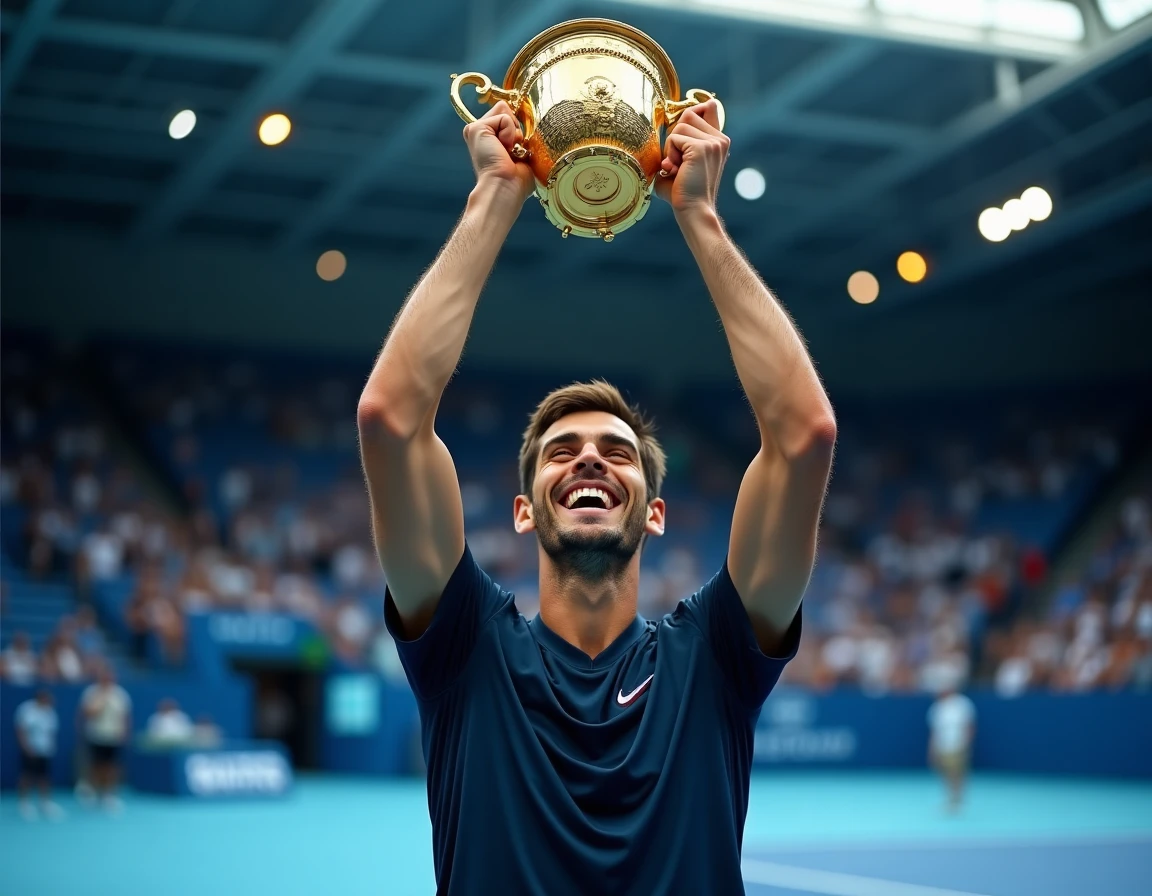
Steffi Graf begins the 1988 season as the world number 1. She is not yet 19 years old. Her game relies on a devastating forehand, exceptional footwork, and the ability to vary her backhand spins.
In January, she wins the Australian Open. Then Roland-Garros in the spring, Wimbledon in the summer, and the US Open in September. Four Grand Slam titles in the same calendar year, an achievement that only a few players have managed in the history of tennis.
Graf does not stop there. On October 1, 1988, she dominates Gabriela Sabatini in the final of the Olympic tournament in Seoul, 6-3, 6-3. Tennis had just been reinstated in the official program of the Games after a decades-long absence.
The gold medal completes an unparalleled season. The term “Golden Slam” is then coined specifically to describe this journey, and it is also the first time that one can achieve the Golden Slam since tennis had not been included in the Games in previous decades.
Golden Slam, calendar slam, career slam: distinctions to know
Why do we sometimes talk about a “calendar slam” and sometimes about a “career slam”? The two concepts are often confused, while they denote very different realities.
- Calendar Slam: winning the Australian Open, Roland-Garros, Wimbledon, and the US Open within the same calendar year. Rod Laver remains the last man to have accomplished this, in 1969.
- Career Slam: winning each of the four major tournaments at least once, without calendar constraints. Novak Djokovic, Rafael Nadal, and Roger Federer have all achieved this.
- Golden Slam: achieving the calendar slam and winning Olympic gold in the same year. Only Steffi Graf has managed this in singles in able-bodied tennis.
This distinction matters because it radically changes the scale of difficulty. Winning four major tournaments over a career of ten or fifteen years allows time to progress and adapt to surfaces. Winning everything in the same year requires physical and mental consistency over twelve consecutive months, without a dip in performance.
Why no one has replicated Graf’s feat since 1988
Novak Djokovic came close in 2021. After winning the Australian Open, Roland-Garros, and Wimbledon, he aimed for the calendar slam at the US Open. He fell in the final. At the Tokyo Games the same year, he did not secure the gold either.
The density of the modern calendar makes the feat even more improbable. The ATP and WTA seasons include dozens of mandatory tournaments. Players over 30 face a physical load documented by medical reports from the professional circuits, with an increase in withdrawals around Olympic periods.
One must also consider the variety of surfaces. The Australian Open is played on hard courts, Roland-Garros on clay, Wimbledon on grass, and the US Open on fast hard courts. Each surface favors a different playing style. Dominating all four in the same year requires a technical versatility that very few players master at this level.
The Olympic factor
The Olympic Games occur only every four years. A player who achieves the calendar slam in a year without the Games cannot claim the Golden Slam. This arithmetic constraint mechanically reduces the windows of opportunity. In 1988, Graf benefited from the return of tennis to the Games in Seoul. The next realistic window only arrives when a player dominates all four majors in an Olympic year.
The Golden Slam also exists in wheelchair para-tennis
Articles dedicated to Graf often overlook a notable fact: the Golden Slam has been accomplished outside of able-bodied tennis. In wheelchair para-tennis, the Dutch Esther Vergeer won all four majors and the Paralympic gold in the same year in 2009.
More recently, Australian Dylan Alcott achieved the same feat in 2021 in the quad wheelchair category, adding the Paralympic gold from Tokyo to his four Grand Slam titles. The ITF and the IOC have recognized these performances in their official reports.
These journeys remind us that Graf’s feat is unique in able-bodied singles, but the concept of a perfect season resonates in other tennis disciplines. The physical rigor and mental consistency required are comparable, even if the playing conditions differ.
Steffi Graf, Rod Laver, Djokovic: three paths to the Grand Slam
Rod Laver achieved the calendar slam twice, in 1962 and 1969. Tennis was not on the Olympic program at those times, which retrospectively closes the door to the Golden Slam for him. His record remains one of the most impressive of the Open era.
Djokovic holds the men’s record for Grand Slam titles. His 2021 attempt will remain as the moment when a player came closest to the Golden Slam in men’s tennis. The defeat in the US Open final against Daniil Medvedev ended the dream.
Steffi Graf remains the only player to have combined the calendar slam and Olympic gold in singles. Her journey in 1988 is not just a record: it is a benchmark that defines the ceiling of individual tennis. As long as the calendar imposes this combination of four surfaces and an Olympic year, replicating this feat will remain an infinitesimal probability.